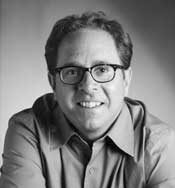
Biography
Terraciano specializes in Latin American history, especially Mexico and the Indigenous cultures and languages of central and southern Mexico (including Nahuatl, Mixtec, and Zapotec) in the colonial period. He is the author of The Mixtecs of Colonial Oaxaca: Ñudzahui History, 16th through 18th Centuries (Stanford University Press, 2001), translated into Spanish in Mexico as Los mixtecos de la Oaxaca colonial by El Fondo de Cultura Económica (2013), and he translated and edited a rare Nahuatl-Mixtec manuscript from Colonial Mexico (1550-1564) called the Codex Sierra (Oklahoma University Press, 2021). He edited and translated many documents in Mesoamerican Voices: Native-Language Writings from Colonial Mexico, Oaxaca, Yucatan, and Guatemala (Cambridge University Press, 2005, co-edited with Lisa Sousa and Matthew Restall). Recently (2019) he co-edited and contributed chapters to two volumes: The Florentine Codex: An Encyclopedia of the Nahua World in 16th-Century Mexico (University of Texas Press, co-edited with Jeanette Peterson); and Canons and Values: Ancient to Modern (Getty Publications, co-edited with Larry Silver). Terraciano has received numerous prizes for his books and research articles.
Terraciano teaches various undergraduate lecture courses and seminars on Latin America, beginning with History 8A, Introduction to Colonial Latin America. He also works independently with students on honors theses and research projects. In 2001, he won the UCLA Distinguished Teaching Award and the Eby Award for the Art of Teaching. He has received two Faculty Recognition awards from the UCLA Academic Advancement Program. In 2012 he received the UCLA Faculty Gold Shield Prize for Academic Excellence, given annually to a faculty member in mid-career who combines outstanding research and undergraduate teaching. Terraciano has received 10 awards for his teaching and graduate mentoring at UCLA.
Since Fall 2015, the Latin American Institute (LAI) has sponsored the instruction of Nahuatl at UCLA. As founder of the program and LAI Director, Terraciano is the instructor of record for these courses. The LAI currently offers nine courses of Elementary, Internediate and Advanced Nahuatl. The courses are cross-listed by three contributing departments: Latin American Studies (through International Area Studies); Chicana/o Studies; and Indigenous Languages of the Americas (through Spanish & Portuguese). The distance-learning courses are taught by native-speakers of the language in Mexico who are affiliated with the Instituto de Docencia e Investigación Etnológica de Zacatecas (IDIEZ). The UCLA Academic Senate has approved the M5A-C Beginning Nahuatl series to fulfill the one-year undergraduate foreign language requirement. In the curriculum development and instruction of these courses, and the pedagogical training of the native-language instructors, the LAI is partnering and sharing expenses with the Latin American Centers at Stanford University, the University of Utah, and UC Berkeley in an alliance called the Latin American Indigenous Studies Alliance (LAISA).
Terraciano has chaired or co-chaired the dissertation committees of 20 students in Latin American history who have received PhDs at UCLA in the last 25 years, and is currently advising 6 doctoral students. The dissertations of his advisees have addressed numerous research topics related to Colonial Latin America, from indigenous histories of southern, central and northern Mexico to race, class, and gender in Guatemala City, from slavery in Cuba, Puebla, and Oaxaca to memories of Inca history in colonial Peru. He has also worked with numerous students in the interdisciplinary Latin American Studies and American Indian Studies MA programs. In addition to acting as principal advisor to those 26 students, Terraciano has served on the dissertation committees of 88 doctoral students in the following departments or schools: Archaeology, Anthropology, Applied Linguistics, Art History, Comparative Literature, Education, Ethnomusicology, Hispanic Languages and Literatures (Spanish & Portuguese), History, Law, Linguistics, Sociology, World Arts and Cultures.